Why storytelling shapes brand success

Branding

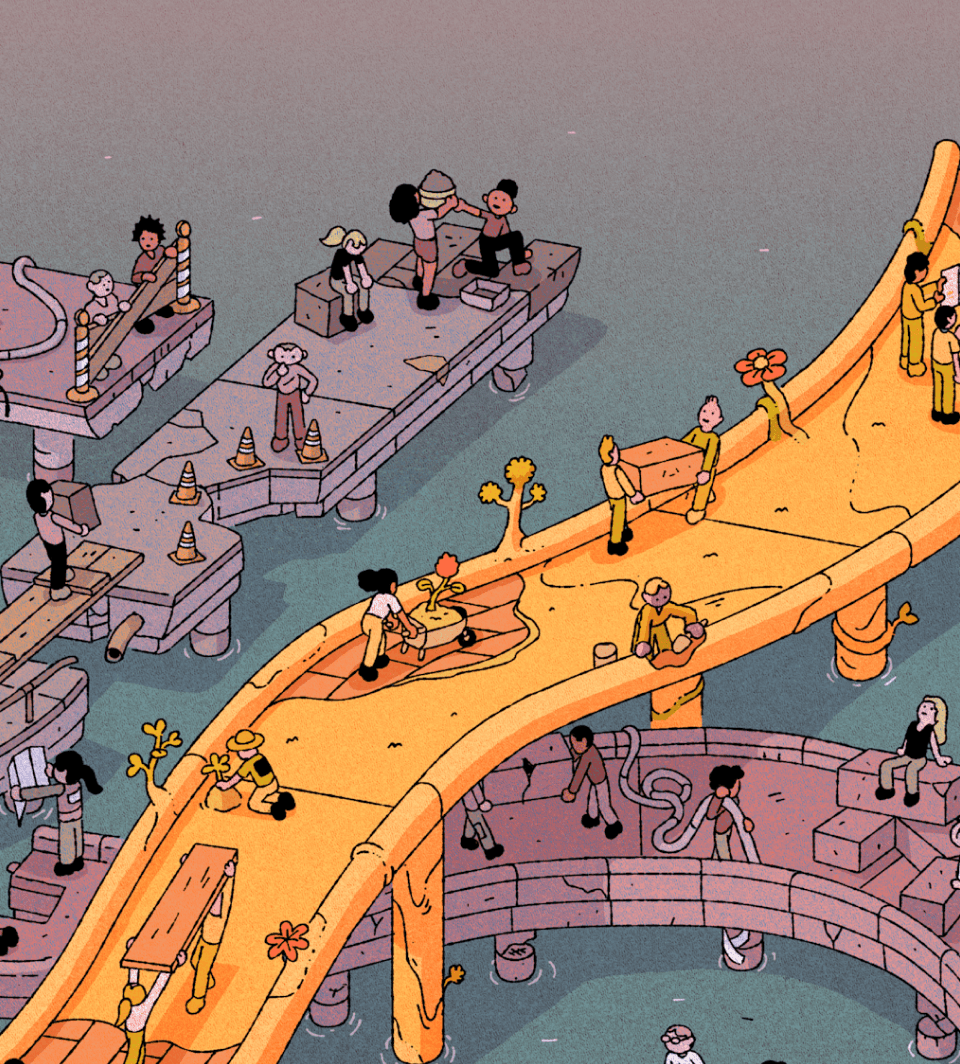
For many engineers, planning represents the antithesis of what we love about building software. We relish exploring new problems, researching and designing solutions, and delivering code we’re proud of. But an inflexible or unrealistic plan can be a bucket of cold water that rouses us from our dreamy fantasies of pure engineering to the cruel, cruel world of mind-bending Gantt charts, weekly check-ins, unforeseen hurdles, and missed due dates.
Plans and estimation are hard. After all, each project and feature represents something you’ve never built before, and the complexity inherent in software development means there will always be surprises and not the kind you’d want to get on your birthday. That’s why iterative approaches to software development, such as agile, focus on delivering work continuously and in small increments so teams can adapt to the unexpected.
However, even planning in smaller chunks has its challenges. We’ve all had a sprint blow up on us due to that one-hour ticket that took a whole week to complete. So why not stop estimating altogether? The #NoEstimates movement popularized on Twitter takes a radical view on planning and estimation, suggesting that instead of spending time calculating every piece of desired functionality in a requirements document, engineers should simply pick the highest-priority item, break it down into its component parts, and deliver it as quickly as possible.
Given that planning is perceived by many as fraught with issues, old-fashioned, and cold sweat–inducing, some might think it’s time to consign formal plans to history. But what if we could reimagine planning as a generative process rather than a restrictive one?
A shift in focus
I think plans have gotten a bad rap. They’ve become synonymous with deadline pressure, arbitrary rigidity, and execution at all costs. Too often, they’re merely a thin veneer masking the imperfect, and to some degree unknowable, realities of our work. But if we acknowledge that plans can’t eliminate uncertainty, we can take advantage of their true potential.
Plans, at their best, aren’t about endless deadlines and rigid performance guidelines. They’re about creating momentum. They breathe life into new products and features and align teams around a common goal. When developed with this framing in mind, they can make the distance between where we are and where we want to go feel more traversable.
Consider the sense of possibility and excitement you experience when you book a vacation. Do you get fired up about planning the drive to the airport? Does mapping out a second-by-second itinerary induce feelings of calm and relaxation? Probably not. You’d likely find it much more enjoyable to focus on the bigger picture: where you’re going and what you’re going to do. Keeping in mind that your plans might change—you can’t predict whether a hike will be rained out, or the water park will be closed—you’re prepared to adapt.
Likewise, if we let go of the idea that a plan has all the answers, we can acknowledge that a dramatic change in the plan doesn’t mean we’ve failed. It just means finding another path forward. To wax philosophical and paraphrase Heraclitus, change is the only constant in life.
What’s more, accepting that plans can and will change can lead to better outcomes. To extend our vacation analogy, imagine you discover a breathtaking hiking trail you hadn’t planned to visit. Changing your plan might just result in the best day of your trip. Now, imagine you discover through early user testing that your solution addresses your customers’ needs after just a few weeks of work instead of the months you’ve scoped out. Revising your plan will grant you the freedom to solve other problems for your users, rather than spending time adding extraneous features and frills to the existing solution.

Mason Clark